


Roof Maintenance Checklist: How to Extend the Life of Your Roof
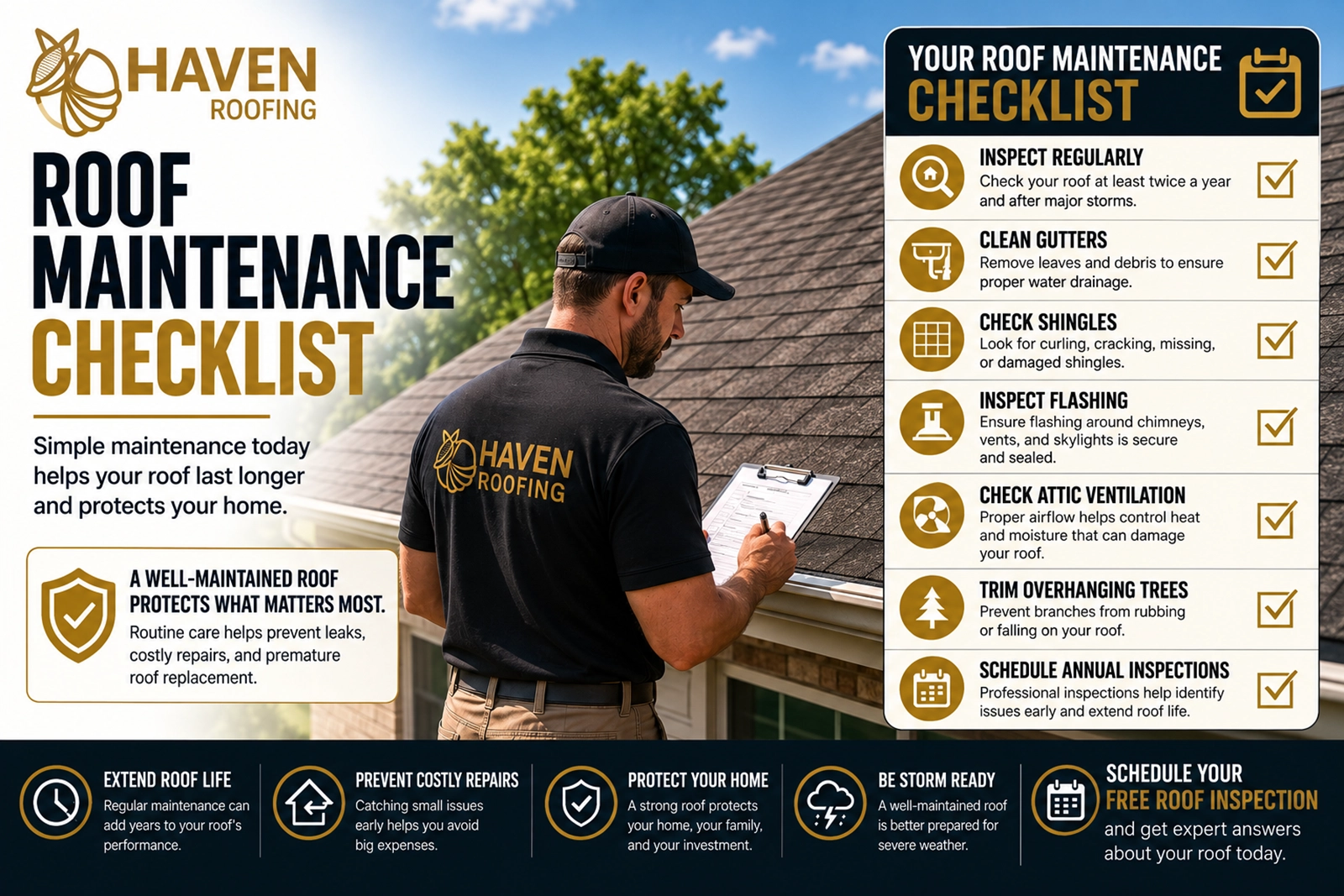
Your roof works every day to protect your home from rain, wind, heat, hail, and changing weather. While every roof has a limited lifespan, routine maintenance can help it perform better, last longer, and reduce the risk of costly repairs.
The good news is that roof maintenance doesn't have to be complicated. By following a simple annual checklist, homeowners can often catch small issues before they become major problems.
This guide walks you through the most important roof maintenance tasks, explains when they should be performed, and helps you determine which jobs are safe to do yourself and which should be left to a professional.
Quick Answer: Why Is Roof Maintenance Important?
Routine roof maintenance helps extend the life of your roofing system by identifying small problems before they become expensive repairs. Regular inspections, gutter cleaning, tree trimming, and preventative maintenance can help reduce water damage, improve drainage, and keep your roof performing as intended.
Pro Tip
Most homeowners should inspect their roof twice a year and after any major storm. Catching a loose shingle today can prevent a costly leak tomorrow.
Your Annual Roof Maintenance Checklist
| Maintenance Task | Recommended Frequency | DIY or Professional? |
|---|---|---|
| Visual Roof Inspection | Spring & Fall | DIY from the ground |
| Clean Gutters | Twice Per Year | DIY or Professional |
| Inspect Shingles | After Major Storms | Professional Recommended |
| Check Flashing | Annually | Professional |
| Trim Overhanging Trees | As Needed | DIY or Arborist |
| Professional Roof Inspection | Annually | Professional |
1. Inspect Your Roof Regularly
You don't need to climb onto your roof to identify many common problems. A simple visual inspection from the ground using binoculars can reveal issues such as:
- Missing shingles
- Curling shingles
- Dark streaks
- Sagging roof areas
- Damaged flashing
- Debris accumulation
If you notice anything unusual, schedule a professional inspection before the problem worsens.
2. Keep Gutters Clean
Gutters play an important role in directing water away from your roof and foundation.
Leaves, pine needles, and debris can clog gutters, allowing water to back up beneath shingles and overflow near your home's foundation.
Recommended Frequency
- Spring
- Late Fall
- After severe storms
3. Look for Damaged or Missing Shingles
Shingles are your roof's first line of defense against the weather. Wind, hail, aging, and falling branches can all damage roofing materials.
Watch for:
- Missing shingles
- Cracked shingles
- Curling edges
- Loose tabs
- Granule loss
Prompt repairs help prevent water from reaching the roof decking beneath.
4. Inspect Flashing Around Roof Penetrations
Flashing protects vulnerable areas around chimneys, skylights, vents, and roof valleys.
Loose or damaged flashing is one of the leading causes of roof leaks.
Because flashing problems aren't always visible from the ground, annual professional inspections are recommended.
5. Check Your Attic
Your attic provides valuable clues about your roof's condition.
Look for:
- Water stains
- Wet insulation
- Mold or mildew
- Daylight coming through the roof
- Excessive heat or humidity
These issues may indicate roof leaks or poor ventilation.
6. Trim Overhanging Tree Branches
Trees add beauty and shade, but branches that touch your roof can damage shingles during windy conditions.
Falling limbs also create one of the most common causes of sudden roof damage.
Keeping branches trimmed back helps reduce both physical damage and debris buildup.
7. Schedule a Professional Roof Inspection
Even if your roof appears to be in good condition, professional inspections often identify problems homeowners can't easily see.
A roofing professional can evaluate:
- Shingle condition
- Flashing
- Roof penetrations
- Ventilation
- Roof decking
- Storm damage
- Signs of aging
Why It Matters
Professional inspections often identify small maintenance issues before they require major repairs or full roof replacement.
Seasonal Roof Maintenance Guide
| Season | Recommended Tasks |
|---|---|
| Spring | Inspect shingles, clean gutters, check for winter damage. |
| Summer | Trim trees, inspect flashing, monitor attic ventilation. |
| Fall | Remove leaves, clean gutters, prepare for winter weather. |
| Winter | Monitor for leaks after storms and watch for fallen branches. |
DIY Maintenance vs. Calling a Professional
| Safe for Most Homeowners | Best Left to a Professional |
|---|---|
| Ground-level visual inspections | Walking on the roof |
| Cleaning accessible gutters | Flashing repairs |
| Checking the attic | Replacing shingles |
| Removing small debris | Structural repairs |
| Trimming low tree branches | Storm damage assessments |
Safety should always come first. If you're uncomfortable working at heights or notice significant roof damage, contact a qualified roofing professional.
How Haven Roofing Helps Homeowners Protect Their Investment
At Haven Roofing, we believe preventative maintenance is one of the best investments homeowners can make. Our experienced team provides comprehensive roof inspections, identifies developing issues, and offers honest recommendations designed to help you maximize the life of your roof.
Whether your roof only needs routine maintenance or you're beginning to see signs of aging, we'll provide straightforward guidance so you can make informed decisions with confidence.
Ready to Make Sure Your Roof Is in Great Shape?
Schedule a free roof inspection with Haven Roofing. We'll evaluate your roof, identify any maintenance concerns, and help you create a plan to keep your roof performing at its best for years to come.
Schedule Your Free Roof Inspection
You can also learn how long a roof should last, discover the warning signs of roof failure, or compare roof repair versus replacement before making your next decision.