


How Long Does a Roof Last? A Guide by Roofing Material
One of the most common questions homeowners ask is, "How long should my roof last?" The answer depends on several factors, including the type of roofing material, the quality of the installation, your local climate, ventilation, maintenance, and exposure to severe weather.
While every roof eventually reaches the end of its service life, proper care can often add years of performance. Understanding what affects roof longevity helps you plan for future maintenance, budget for replacement, and avoid costly surprises.
This guide compares the lifespan of today's most common roofing materials, explains what shortens a roof's life, and shares practical ways to maximize your investment.
Quick Answer: How Long Does a Roof Last?
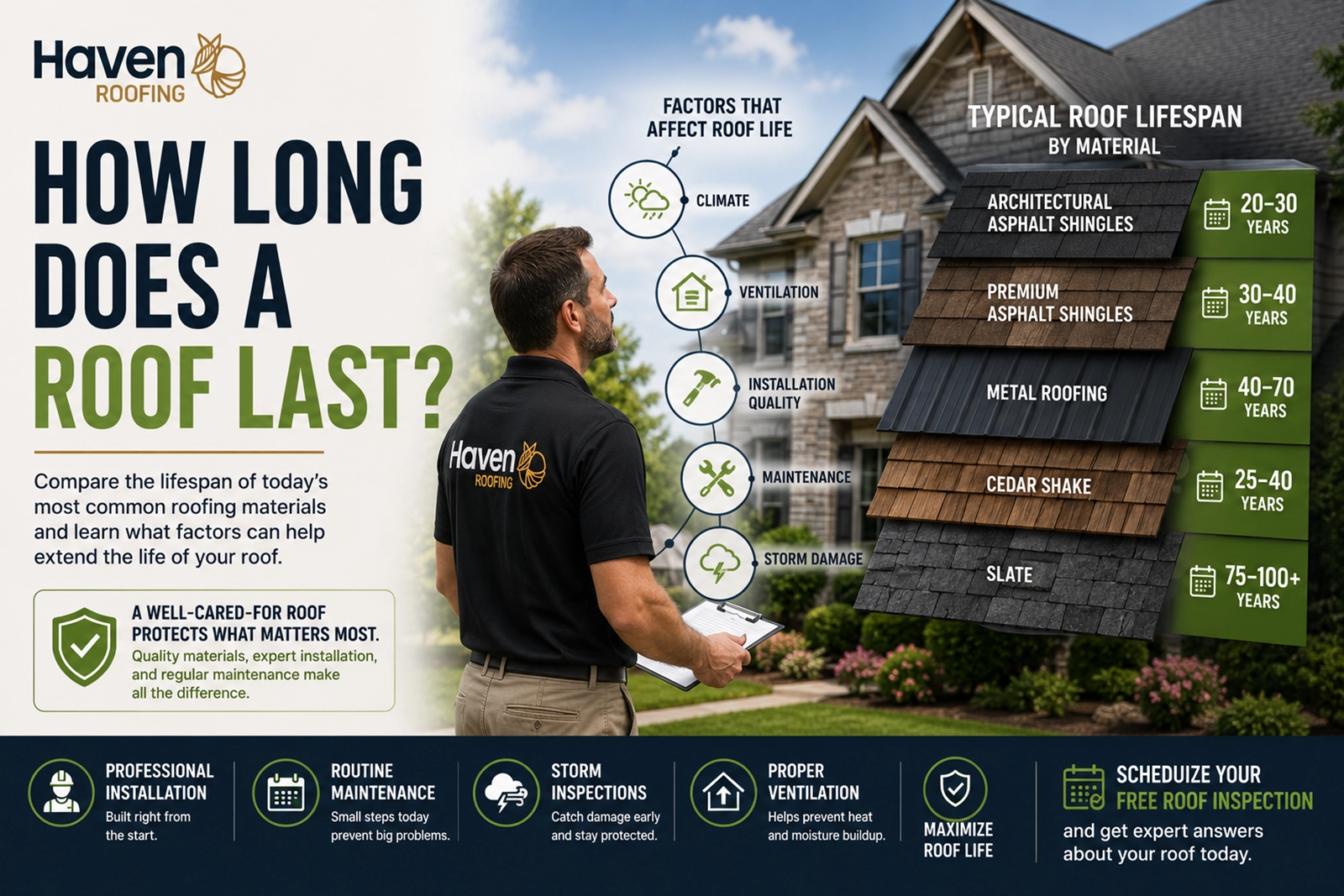
Most residential roofs last anywhere from 20 to over 100 years, depending on the roofing material and how well the roof is maintained.
| Roofing Material | Average Lifespan |
|---|---|
| Architectural Asphalt Shingles | 20–30 Years |
| Premium Asphalt Shingles | 30–40 Years |
| Metal Roofing | 40–70 Years |
| Cedar Shake | 25–40 Years |
| Slate Roofing | 75–100+ Years |
These are general expectations. Individual roofs may last longer or shorter depending on installation quality and environmental conditions.
What Affects the Lifespan of a Roof?
The roofing material is only one part of the equation. Several factors influence how quickly a roof ages.
Installation Quality
Even premium roofing products can fail prematurely if they are not installed correctly. Proper flashing, ventilation, fastening methods, and workmanship all contribute to long-term performance.
Weather and Climate
Homes throughout Memphis and Northwest Mississippi experience intense summer heat, heavy rain, hail, high winds, and seasonal storms. Repeated exposure to severe weather naturally accelerates roof aging.
Ventilation
Poor attic ventilation traps heat and moisture, increasing shingle temperatures and reducing roof life. Proper airflow helps regulate attic temperatures and protects both roofing materials and decking.
Maintenance
Small problems become expensive repairs when left unaddressed. Routine inspections and preventative maintenance often help roofs reach or exceed their expected lifespan.
Trees and Debris
Overhanging limbs, leaves, moss, and debris trap moisture and can damage shingles over time. Keeping your roof clean helps prevent unnecessary deterioration.
How Long Do Asphalt Shingle Roofs Last?
Architectural asphalt shingles remain the most popular residential roofing material because they balance affordability, durability, and appearance.
- Architectural shingles typically last 20–30 years.
- Premium asphalt products may last 30–40 years under favorable conditions.
- Regular inspections and proper attic ventilation help maximize performance.
Storm damage, poor ventilation, and neglected maintenance can significantly shorten these estimates.
How Long Does a Metal Roof Last?
Metal roofing offers one of the longest service lives available for residential homes.
- Typical lifespan: 40–70 years
- Excellent resistance to wind and fire
- Low maintenance requirements
- Highly durable when professionally installed
Metal roofing often carries a higher upfront investment but may offer exceptional long-term value.
How Long Do Cedar Shake and Slate Roofs Last?
Premium natural roofing materials can last for decades when properly maintained.
| Material | Expected Lifespan |
|---|---|
| Cedar Shake | 25–40 Years |
| Slate | 75–100+ Years |
These roofing systems require specialized installation and maintenance but can provide outstanding longevity.
Signs Your Roof May Be Near the End of Its Life
Age alone doesn't determine whether a roof should be replaced. Watch for warning signs such as:
- Missing or damaged shingles
- Curling or cracking shingles
- Granules collecting in gutters
- Frequent leaks
- Sagging roof sections
- Water stains inside your home
- Repeated repairs over several years
If your roof is approaching its expected lifespan and you're seeing multiple warning signs, it's a good time to schedule a professional inspection.
How to Help Your Roof Last Longer
While no roof lasts forever, regular maintenance can help extend its service life.
- Schedule annual roof inspections.
- Inspect your roof after major storms.
- Keep gutters clean.
- Trim overhanging tree branches.
- Repair damaged shingles promptly.
- Maintain proper attic ventilation.
- Address leaks before they spread.
Pro Tip
Many roofing problems begin as small maintenance issues. Addressing them early is often much less expensive than waiting until water damage develops.
When Should You Replace Your Roof?
If your roof is nearing the end of its expected lifespan, has sustained significant storm damage, or requires frequent repairs, replacement may be the more cost-effective long-term solution.
A professional inspection evaluates more than just the age of your roof. It considers the condition of the shingles, flashing, decking, ventilation, and structural components to determine whether repair or replacement is the better option.
How Haven Roofing Helps Homeowners
At Haven Roofing, we help homeowners understand the true condition of their roof through honest, professional inspections. Whether your roof has years of life remaining or it's time to begin planning for replacement, our goal is to provide clear recommendations based on the condition of your roof—not sales pressure.
We'll explain what we find, answer your questions, and help you make an informed decision that's best for your home and your budget.
Wondering How Much Life Your Roof Has Left?
Schedule a free roof inspection with Haven Roofing. We'll evaluate the condition of your roof, identify any concerns, estimate its remaining service life, and help you understand your options.
Schedule Your Free Roof Inspection
You can also explore our Roof Repair vs. Roof Replacement Guide, learn what affects roof replacement costs, or estimate your investment with our Roof Cost Calculator.