Start With the Age of Your Roof
The age of your roof is one of the most important factors when deciding between repair and replacement.
A newer roof with isolated storm damage may be an excellent candidate for repair. An older roof with the same damage may be more difficult to repair effectively because the surrounding shingles may already be brittle, worn, or near the end of their useful life.
Typical roofing material lifespans may include:
| Roofing Material |
Typical Service Life |
| Three-Tab Asphalt Shingles |
Approximately 15 to 20 years |
| Architectural Asphalt Shingles |
Approximately 20 to 30 years |
| Designer or Premium Shingles |
Approximately 30 to 40 years |
| Standing Seam Metal Roofing |
Approximately 40 to 70 years |
These ranges are general estimates. Actual roof life depends on installation quality, attic ventilation, weather exposure, maintenance, roofing materials, and the structure of the home.
Local Roofing Tip
Heat, humidity, heavy rain, wind, and severe storms can accelerate roofing wear in Memphis and Northwest Mississippi. A roof may begin showing signs of failure before reaching the upper end of its estimated lifespan.
Consider the Extent of the Damage
The size and location of the damaged area often determine whether a repair is practical.
A few missing shingles on one section of an otherwise healthy roof may be repairable. Damage covering several roof slopes, multiple valleys, large sections of flashing, or broad areas of shingles may indicate a more serious problem.
Localized Damage
Localized damage is confined to a specific area and does not appear to affect the overall roofing system. Examples may include:
- A small number of missing or damaged shingles.
- A single damaged pipe boot.
- Minor flashing damage around a vent or chimney.
- A small leak with a clearly identified source.
- Damage caused by a fallen limb in one limited area.
When the surrounding roofing materials remain flexible and secure, these problems may often be corrected without replacing the entire roof.
Widespread Damage
Widespread damage affects multiple areas or reflects deterioration throughout the roofing system. Warning signs may include:
- Missing shingles across several roof slopes.
- Large areas of curling, cracking, or loose shingles.
- Significant granule loss throughout the roof.
- Repeated leaks in different areas of the home.
- Soft, sagging, or deteriorated roof decking.
- Storm damage affecting a large percentage of the roof.
- Water intrusion around multiple penetrations or flashing points.
When damage is widespread, repairing one section may not address the underlying condition of the remaining roof.
Look at the Condition of the Remaining Shingles
A successful roof repair depends on more than replacing the visibly damaged materials. The surrounding shingles must also be strong enough to support the repair.
Older asphalt shingles can become brittle and difficult to lift without cracking. Removing one damaged shingle may cause nearby shingles to break, making a small repair more extensive than expected.
Matching the color and appearance of older shingles can also be challenging. Even when the same manufacturer and color are available, years of sun exposure and weathering may cause repaired areas to remain noticeably different.
A color difference does not necessarily affect performance, but it may matter if appearance and curb appeal are important to you.
Review Your Roof's Repair History
One well-planned repair can extend the useful life of a roof. Frequent repairs may indicate that the roofing system is beginning to fail.
Consider how often you have needed roofing work and whether the problems continue occurring in the same location or appear in new areas.
Repeated repair expenses can quickly add up. For example, several repairs completed over a short period may cost thousands of dollars while still leaving you with an aging roof that eventually needs replacement.
Think Beyond the Current Leak
A repair may stop today's water intrusion, but it does not reset the age of the rest of the roof. The goal should be to choose the option that provides the best overall value, not simply the lowest immediate cost.
Compare the Cost of Repair With the Value of Replacement
Roof repair usually costs less than full replacement, but the least expensive option today is not always the most economical option over time.
When evaluating a repair estimate, consider:
- The age of the roof.
- The expected remaining service life.
- The likelihood of additional repairs.
- Whether the repair includes new flashing or decking work.
- Whether the repair is covered by a workmanship warranty.
- How the repair cost compares with the cost of replacement.
If the roof is relatively young and the damage is isolated, a repair may provide excellent value. If the roof is already nearing the end of its service life, investing heavily in repairs may not make financial sense.
For additional information about roofing prices, visit our Roofing Costs Guide or learn more about what affects the cost of a roof replacement.
Check for Damage Beneath the Shingles
The visible surface of the roof is only one part of the roofing system. Water may travel beneath shingles and affect underlayment, flashing, insulation, attic framing, or roof decking before signs become visible inside the home.
Damaged decking may feel soft, appear dark or stained, or show signs of rot. In severe cases, sections of the roof may begin to sag.
A repair may still be possible when decking damage is limited to a small area. Extensive decking deterioration may make replacement the safer and more practical option.
Did You Know?
The location of a ceiling stain may not be directly beneath the roof leak. Water can travel along decking, rafters, pipes, or insulation before entering the living space.
Think About Your Long-Term Plans
Your plans for the home can also influence whether repair or replacement makes more sense.
If You Plan to Stay in the Home
A roof replacement may provide greater peace of mind, improved protection, stronger warranties, and fewer unexpected repair expenses when you expect to remain in the home for many years.
If You Plan to Sell the Home
A newer roof may improve curb appeal and reduce concerns during a buyer's home inspection. However, replacing a roof before selling is not always necessary. A professional inspection can help you understand whether a repair is sufficient or whether the roof could become a concern during the sale.
If You Plan to Install Solar Panels
The roof should be evaluated before installing solar panels. Installing panels over an aging roof may require the panels to be removed and reinstalled when the roof is replaced later.
If You Are Filing an Insurance Claim
Storm damage may qualify for insurance coverage depending on your policy, the cause of the damage, the age and condition of the roof, and the findings of the insurance adjuster.
Do not assume that visible storm damage automatically means the entire roof will be replaced. Insurance decisions are based on the policy terms and documented damage.
When Roof Repair Is Usually the Better Choice
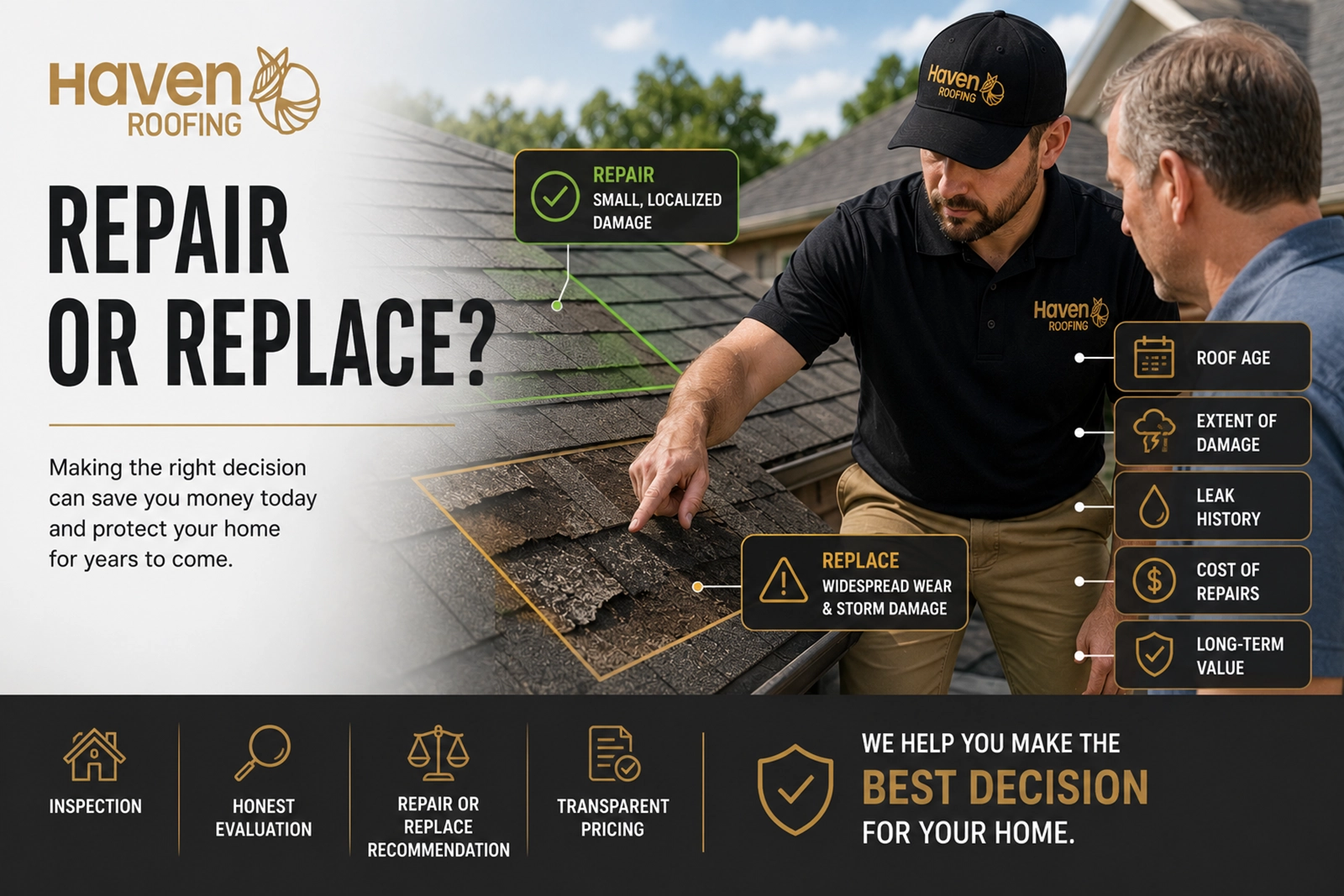
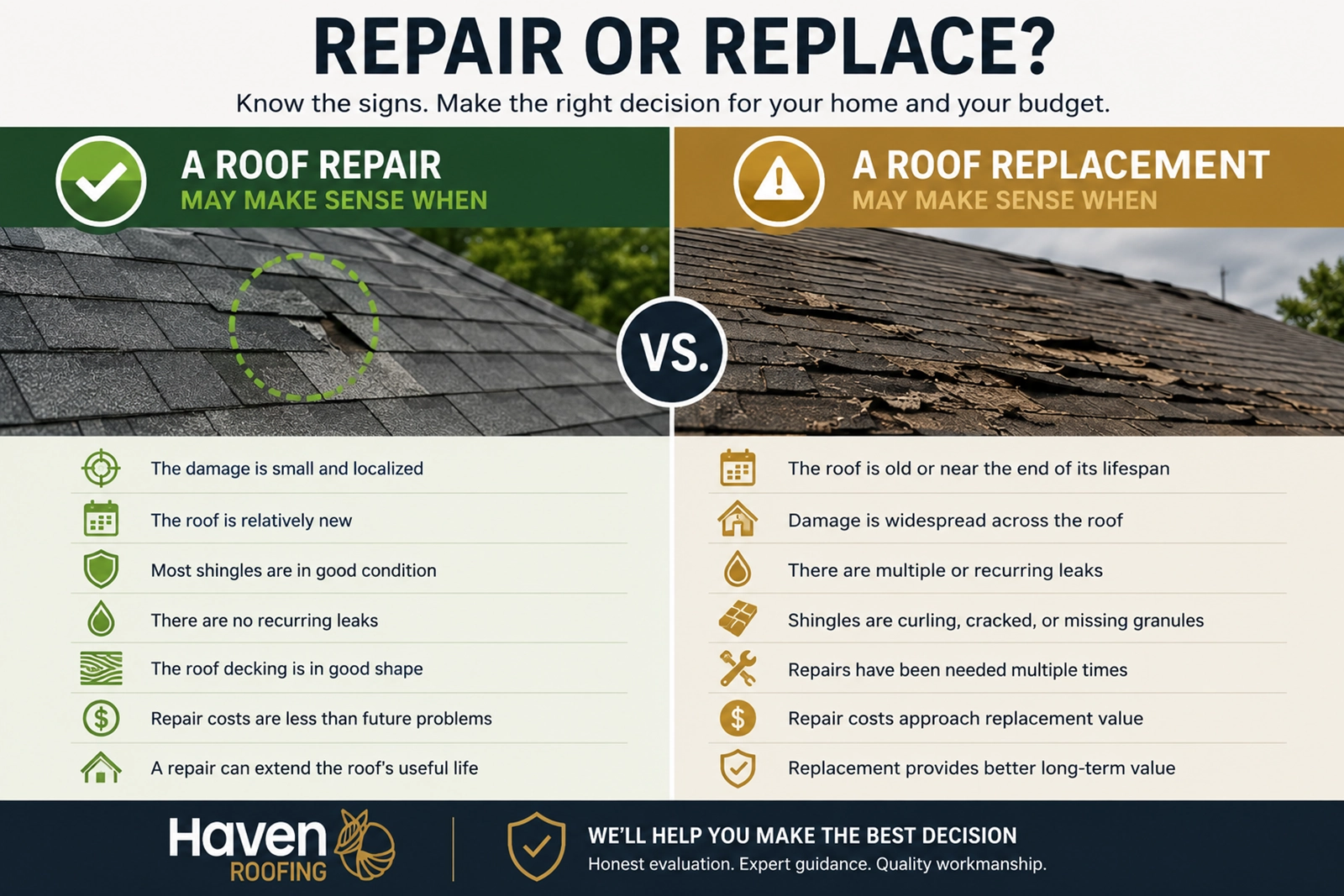
Repair is often the most practical option when:
- The roof is still within the early or middle portion of its expected lifespan.
- Damage is limited to one small section.
- The surrounding shingles are secure and flexible.
- The leak source can be clearly identified.
- The roof decking remains in good condition.
- There is no history of repeated leaks.
- The repair can be completed without disturbing large portions of the roof.
- The cost of repair is reasonable compared with the roof's remaining service life.
A trustworthy roofing contractor should not recommend replacing a healthy roof when a properly completed repair will solve the problem.
When Roof Replacement Is Usually the Better Investment
Replacement may provide better long-term value when:
- The roof is approaching or has exceeded its expected lifespan.
- Damage appears across multiple roof sections.
- The roof has developed recurring leaks.
- Shingles are brittle, curling, cracking, or losing large amounts of granules.
- Previous repairs have failed or new problems continue developing.
- There is extensive decking or structural damage.
- The roofing system has poor ventilation or outdated components.
- Repair costs represent a significant percentage of replacement costs.
- You want improved protection, appearance, energy performance, or warranty coverage.
A full replacement also allows the contractor to inspect the exposed roof deck, replace deteriorated materials, improve flashing, evaluate ventilation, and install a complete roofing system designed to work together.
Why a Professional Roof Inspection Matters
It is difficult to determine the true condition of a roof from the ground. Missing shingles may be visible, but many roofing problems require a closer inspection.
A professional roof inspection should evaluate:
- Shingle condition and granule loss.
- Missing, lifted, cracked, or creased shingles.
- Flashing around chimneys, vents, skylights, and walls.
- Pipe boots and roof penetrations.
- Valleys, ridges, hips, and roof transitions.
- Signs of moisture intrusion or deteriorated decking.
- Attic ventilation and airflow.
- Previous repairs and installation quality.
- Storm, wind, hail, or tree damage.
The contractor should explain what was found, show you photos when possible, and clearly outline the benefits and limitations of each option.
Questions to Ask Before Approving a Roof Repair
Before moving forward with a repair, ask the roofing contractor:
- What caused the damage or leak?
- Is the problem limited to one area?
- How much useful life may remain in the roof?
- Could nearby shingles be damaged during the repair?
- Will the new shingles closely match the existing roof?
- Does the repair include flashing, underlayment, or decking work?
- What workmanship warranty is included?
- Is additional damage likely to appear soon?
- Would replacement offer better long-term value?
A detailed explanation can help you distinguish between a temporary patch and a repair designed to provide lasting protection.
Questions to Ask Before Approving a Roof Replacement
If replacement is recommended, ask:
- Why is replacement recommended instead of repair?
- What roofing materials are included?
- Will the existing roof be completely removed?
- How will damaged decking be handled?
- Will flashing and pipe boots be replaced?
- Are ventilation improvements included?
- What manufacturer and workmanship warranties are provided?
- How will landscaping and property be protected?
- Is cleanup and debris removal included?
- What could cause the final price to change?
For help preparing your budget, use our Roof Cost Calculator to get a preliminary estimate based on your home and roofing preferences.
Not Sure Whether to Repair or Replace Your Roof?
Haven Roofing can inspect your roofing system, document the condition of the roof, and explain whether a targeted repair or full replacement makes the most sense for your home.
We believe homeowners deserve clear information before making a major decision. If a repair is the appropriate solution, we will explain what needs to be fixed. If replacement offers better long-term value, we will show you why.
Schedule Your Free Roof Inspection
You can also explore our recent roofing projects to see completed work throughout Memphis and Northwest Mississippi.