



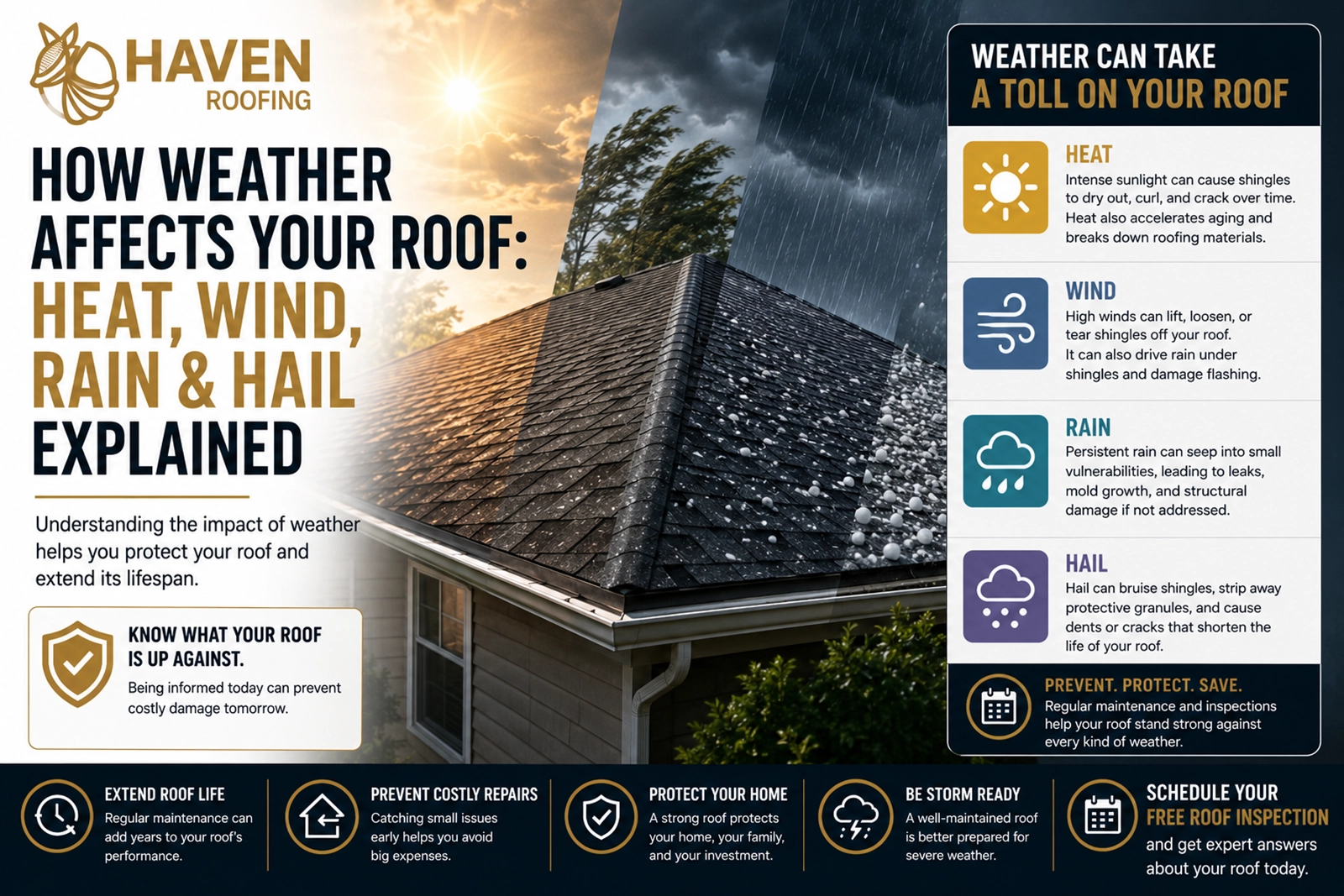
How Weather Affects Your Roof: Heat, Wind, Rain & Hail Explained
Your roof is your home's first line of defense against the elements. Every day, it is exposed to sunlight, heat, wind, rain, humidity, and sudden storms. Over time, those conditions can weaken roofing materials, loosen shingles, damage flashing, and create openings that allow moisture into your home.
Weather-related roof damage is not always obvious from the ground. A roof may look fine while shingles are losing granules, seal strips are weakening, or moisture is beginning to work beneath the surface. Understanding how weather affects your roof can help you recognize problems earlier, schedule maintenance at the right time, and avoid costly repairs.
This guide explains how heat, wind, rain, and hail affect residential roofing systems and what homeowners can do to protect their roofs throughout the year.
Quick Answer: How Does Weather Affect a Roof?
Weather gradually wears down roofing materials and can also cause sudden damage during severe storms. Heat and sunlight can dry out and weaken shingles. Wind can lift or remove them. Rain can enter through small vulnerabilities. Hail can bruise shingles and knock away protective granules.
The amount of damage depends on the roof's age, material, installation quality, maintenance history, ventilation, and exposure to severe weather.
Important to Know
Roof damage does not always cause an immediate leak. Some weather-related damage develops slowly and may not become noticeable until months after the original storm or exposure.
How Heat and Sunlight Affect Your Roof
Roofs absorb a significant amount of heat during sunny weather. Dark asphalt shingles can become much hotter than the outdoor air temperature, especially during long summer days.
Repeated heating and cooling causes roofing materials to expand during the day and contract at night. This process is known as thermal cycling. Over time, thermal cycling can place stress on shingles, fasteners, sealants, and flashing.
Common Heat-Related Roofing Problems
- Dry, brittle, or cracked shingles
- Curling or lifting shingle edges
- Fading or discoloration
- Accelerated granule loss
- Weakened seal strips
- Deteriorated roof sealants
- Reduced roofing material lifespan
Ultraviolet radiation also breaks down roofing materials. Prolonged UV exposure can dry out the asphalt within shingles and reduce their ability to remain flexible.
The Role of Attic Ventilation
Proper attic ventilation helps release trapped heat and moisture. Without adequate ventilation, excessive attic temperatures may increase heat stress on the underside of the roof deck and shingles.
Ventilation issues may also contribute to higher cooling costs, uneven indoor temperatures, and premature roof deterioration. A professional inspection can help determine whether your attic has balanced intake and exhaust ventilation.
How Wind Affects Your Roof
Wind does not affect every part of a roof equally. Corners, edges, ridges, and areas around roof penetrations often experience greater pressure during high winds.
As wind moves over and around a home, it can create uplift beneath shingles. If shingles are already loose, aged, improperly installed, or weakened by previous storms, strong winds may lift or remove them.
Common Signs of Wind Damage
- Missing shingles
- Lifted or creased shingles
- Loose ridge caps
- Exposed roofing underlayment
- Damaged flashing
- Loose gutters or fascia
- Tree branches or debris on the roof
A lifted shingle may settle back into place after a storm, making the damage difficult to see from the ground. However, the adhesive seal may have been broken, leaving the shingle more vulnerable during the next storm.
Wind-Driven Rain
Strong winds can push rain beneath loose shingles, around flashing, or through small openings that would not normally leak during a gentle rainfall. Wind-driven rain commonly affects roof edges, valleys, chimneys, skylights, and wall-to-roof transitions.
How Rain Affects Your Roof
A properly installed and maintained roof is designed to shed water efficiently. Problems begin when rain reaches damaged shingles, deteriorated flashing, clogged drainage areas, or exposed roof decking.
Even a small opening can allow water beneath the roofing system. Once moisture enters, it may travel along the roof deck, rafters, insulation, or ceiling joists before becoming visible inside the home.
Common Rain-Related Roof Problems
- Roof leaks
- Water stains on ceilings or walls
- Wet attic insulation
- Wood rot
- Mold or mildew growth
- Damaged roof decking
- Stains around vents, chimneys, or skylights
Why Gutters Matter During Heavy Rain
Gutters and downspouts help direct water away from the roof, siding, foundation, and landscaping. When gutters become clogged, water may back up beneath roof edges or overflow against fascia boards.
Regular gutter cleaning is especially important for homes surrounded by mature trees. Leaves, twigs, shingle granules, and other debris can reduce drainage and increase the chance of water-related damage.
How Hail Affects Your Roof
Hail damage varies based on hailstone size, density, wind speed, roof age, roofing material, and the angle of impact. Some hailstorms leave obvious damage, while others create subtle bruising that is difficult to identify without a close inspection.
On asphalt shingles, hail can loosen or remove the protective granule layer. These granules help protect the underlying asphalt from sunlight and weather exposure. Once they are lost, the shingle may deteriorate faster.
Common Signs of Hail Damage
- Dark impact marks on shingles
- Bruised or softened areas
- Missing granules
- Cracked shingles
- Dented vents, flashing, or gutters
- Damage to siding or exterior trim
- Exposed asphalt beneath the granule layer
Hail damage may not cause immediate water intrusion. A bruised shingle can weaken over time as sunlight, rain, and temperature changes continue to affect the damaged area.
After a Hailstorm
Check gutters, downspouts, window screens, siding, and outdoor fixtures for visible impact damage. These signs may indicate that your roof was also affected and should be inspected.
How Humidity Affects Roofing Systems
Humidity can contribute to moisture problems both above and below the roof. Warm, humid air may enter the attic through gaps, air leaks, or inadequate ventilation.
When moisture becomes trapped in an attic, it may lead to condensation, mold growth, damp insulation, and wood deterioration. These problems can affect indoor comfort and the structural components of the roofing system.
Possible Signs of Attic Moisture Problems
- Musty odors
- Visible mold or mildew
- Dark staining on roof decking
- Rust on roofing nails or metal components
- Damp or compressed insulation
- Excessive attic heat
Proper ventilation, insulation, and air sealing work together to help control attic heat and moisture.
How Severe Storms Create Multiple Types of Roof Damage
Severe storms often combine several damaging conditions at once. A single storm may include strong winds, heavy rain, hail, falling branches, and flying debris.
Wind may loosen shingles before rain is driven beneath them. Hail may damage the protective surface of the roof while falling branches puncture shingles or decking. Because storm damage can be layered, a roof should be evaluated as a complete system rather than checking only for missing shingles.
| Weather Condition | Possible Roof Damage | Warning Signs |
|---|---|---|
| Heat and Sunlight | Drying, cracking, curling, and accelerated aging | Brittle shingles, fading, granule loss, curling edges |
| Wind | Lifted, creased, loose, or missing shingles | Shingles in the yard, exposed areas, loose flashing |
| Rain | Leaks, moisture intrusion, rot, and mold | Water stains, damp insulation, musty odors |
| Hail | Bruising, cracking, dents, and granule loss | Impact marks, damaged gutters, exposed asphalt |
| Falling Debris | Punctures, broken shingles, and structural damage | Branches on roof, visible holes, damaged decking |
Does an Older Roof Experience More Weather Damage?
Older roofs are generally more vulnerable because roofing materials naturally become less flexible over time. Shingles may lose granules, adhesives may weaken, and flashing or sealants may begin to deteriorate.
A storm that causes little or no damage to a newer roof may have a greater impact on an older roofing system. This does not mean every older roof needs immediate replacement, but it does make regular inspections more important.
If your roof is approaching the end of its expected lifespan, a professional inspection can help you determine whether maintenance, repairs, or replacement planning is appropriate.
What Should You Check After Severe Weather?
Homeowners can safely perform a basic visual inspection from the ground after a storm. Avoid climbing onto the roof, especially when surfaces are wet, steep, or unstable.
Post-Storm Roof Checklist
- Look for shingles or roofing debris in the yard.
- Check for missing or visibly lifted shingles.
- Look for fallen branches or impact damage.
- Inspect gutters and downspouts for dents.
- Check ceilings and walls for new water stains.
- Look inside the attic for moisture or daylight.
- Photograph visible damage before cleanup.
- Schedule a professional inspection when damage is suspected.
Documenting damage can also be helpful if an insurance claim becomes necessary.
How to Protect Your Roof From Weather Damage
You cannot control the weather, but you can reduce the risk of damage through regular maintenance and early repairs.
Ways to Protect Your Roof
- Schedule annual professional roof inspections.
- Inspect the roof after major storms.
- Keep gutters and downspouts clear.
- Trim branches away from the roof.
- Repair missing or damaged shingles promptly.
- Maintain proper attic ventilation.
- Check flashing around chimneys, vents, and skylights.
- Address leaks and moisture problems immediately.
Preventative maintenance is usually less expensive than repairing extensive water or structural damage after a problem has been allowed to grow.
When Should You Call a Roofing Professional?
Contact a roofing professional when you notice missing shingles, ceiling stains, loose flashing, visible impact marks, storm debris, sagging areas, or unexplained moisture in the attic.
You should also schedule an inspection after significant hail, strong winds, or severe storms, even when damage is not immediately visible. A trained roofer can safely inspect areas that are difficult to evaluate from the ground.
A professional inspection should provide clear documentation of the roof's condition, photographs of concerns, and practical recommendations based on the severity of the damage.
How Haven Roofing Helps Protect Your Home
Haven Roofing helps homeowners throughout Memphis, Tennessee and Northwest Mississippi understand the condition of their roofs after heat exposure, heavy rain, high winds, hail, and severe storms.
Our inspections evaluate the entire roofing system, including shingles, flashing, roof penetrations, drainage areas, ventilation, and visible signs of moisture intrusion. We explain what we find and provide straightforward recommendations based on the roof's condition.
Whether your roof needs maintenance, a targeted repair, or replacement planning, our goal is to help you make an informed decision without unnecessary pressure.
Has Severe Weather Affected Your Roof?
Weather-related damage is not always visible from the ground. Schedule a free roof inspection with Haven Roofing to identify potential problems before they lead to leaks, interior damage, or costly repairs.
Schedule Your Free Roof Inspection
You can also learn how to maintain your roof throughout the year, review our roof maintenance checklist, or discover the signs that your roof may need replacing.